


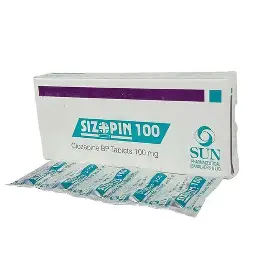
Sizopin 100-MG Tablet
Made in:
Brand:
Capacity:

Authentic Product

Easy Return

Secure payments and fast deliveries
Indications Sizopin is indicated in- Schizophrenia in patients unresponsive to, or intolerant of, conventional antipsychotic drugs. Psychosis in Parkinson’s disease. Pharmacology Clozapine is classified as an […]
Indications
- Schizophrenia in patients unresponsive to, or intolerant of, conventional antipsychotic drugs.
- Psychosis in Parkinson’s disease.
Dosage & Administration
Psychosis in Parkinson’s disease: Adult over 16 years, 12.5 mg at bedtime then increased according to response in steps of 12.5 mg up to twice weekly; usual dose range 25-37.5 mg at bedtime, usual maximum 50 mg daily; exceptionally, dose may be increased further in steps of 12.5 mg weekly to maximum 100 mg daily in 1-2 divided doses.
Interaction
Although concomitant administration of Carbamazepine and Sizopin is not recommended, it should be noted that discontinuation of concomitant Carbamazepine may result in an increase in plasma Sizopin levels. A reduced Sizopin dosage should be used when it is combined with drugs like fluvoxamine, paroxetine and sertraline. The action of hypotensive drugs may be potentiated. Other anticholinergic drug action may also be increased. Administration of adrenaline should generally be avoided due to possibility of reversal of adrenaline effect due to alpha adrenergic blockade by Sizopin. Concomitant use of Sizopin with other drugs metabolized by cytochrome P450 2D6 (such as phenothiazines, antidepressants, propafenone, flecainide and encainide) or those that inhibit this enzyme such as quinidine; require lower doses of either Sizopin or the other drugs.
Contraindications
Side Effects
Pregnancy & Lactation
Precautions & Warnings
Cognitive and/or motor impairment (sedation) is common with Sizopin, resulting in impaired performance of tasks requiring alertness (eg, operating machinery or driving). Use with caution in patients at risk of seizures, including those with a history of seizures, head trauma, brain damage, alcoholism, or concurrent therapy with medications which may lower seizure threshold. Has been associated with benign, self-limiting fever (<100.4°F, usually within first 3 weeks). However, dozapine may also be associated with severe febrile reactions, including neuroleptic malignant syndrome (NMS). Sizopin’s potential for extrapyramidal symptoms appear to be extremely low.
May cause anticholinergic effects; should be used with caution in patients with urinary retention, benign prostatic hyperplasia, narrow-angle glaucoma, xerostomia, visual problems, constipation, or history of bowel obstruction. May cause hyperglycemia; in some cases may be extreme and associated with ketoacidosis, hyperosmolar coma, or death. Use with caution in patients with diabetes or other disorders of glucose regulation; monitor for worsening of glucose control. Use with caution in patients with hepatic disease or impairment; hepatitis has been reported as a consequence of therapy.
May cause orthostatic hypotension and tachycardia; should be used with caution in patients at risk of hypotension or in patients where transient hypotensive episodes would be poorly tolerated (cardiovascular disease or cerebrovascular disease). Concurrent use of psychotropics and benzodiazepines may increase the risk of severe cardiopulmonary reactions.
Myocarditis, pericarditis, pericardial effusion, cardiomyopathy, and CHF have also been associated with Sizopin. Fatalities due to myocarditis have been reported; highest risk in the first month of therapy, however, later cases also reported. Myocarditis or cardiomyopathy should be considered in patients who present with signs/symptoms of heart failure (dyspnea, fatigue, orthopnea, paroxysmal nocturnal dyspnea, peripheral edema), chest pain, palpitations, new electrocardiographic abnormalities (arrhythmias, ST-T wave abnormalities), or unexplained fever. Patients with tachycardia during the first month of therapy should be closely monitored for other signs of myocarditis. Discontinue Sizopin if myocarditis is suspected; do not rechallenge in patients with Sizopin-related myocarditis. The reported rate of cardiomyopathy in Sizopin treated patients is similar to that in the general population. The majority of patients were over 50 years of age and were taking Sizopin for >6 months. Sizopin should be discontinued in patients with confirmed cardiomyopathy unless benefit clearly outweighs risk. Rare cases of thromboembolism, including pulmonary embolism and stroke resulting in fatalities, have been associated with Sizopin.
Overdose Effects
Management of Overdose: Should be established and maintained an airway; should be ensured adequate oxygenation and ventilation. Activated charcoal, which may be used with sorbitol, may be as or more effective than emesis or lavage, and should be considered in treating overdosage. Cardiac and vital signs monitoring is recommended along with general symptomatic and supportive measures. Additional surveillance should be continued for several days because of the risk of delayed effects. Avoid epinephrine and derivatives when treating hypotension, and quinidine and procainamide when treating cardiac arrhythmia. There are no specific antidotes for Sizopin. Forced diuresis, dialysis, hemoperfusion and exchange transfusion are unlikely to be of benefit. ln managing overdosage, the physician should consider the possibility of multiple drug involvement.
Therapeutic Class
Storage Conditions
| Capacity | 10 Tablets ( 1Strips ) |
|---|
Related products
- Capacity: 10 Tablets (1 Strip)
৳ 220.00
- Capacity: 10 Tablets (1 Strip)
৳ 30.10
- Capacity: 10 Tablets (1 Strip)
৳ 100.30
- Capacity: 10 Tablets (1 Strip)
৳ 80.00
৳ 60.41



Reviews
There are no reviews yet.