


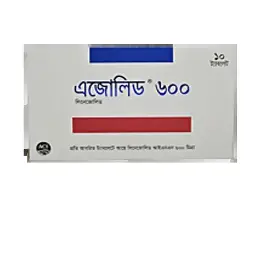
Ezolid 600mg Tablet
Made in:
Brand:
Capacity:

Authentic Product

Easy Return

Secure payments and fast deliveries
Indications Ezolid is indicated for the treatment of: Nosocomial pneumonia Community-acquired pneumonia Complicated skin and skin structure infection including diabetic foot infections, without concomitant osteomyelitis Uncomplicated […]
Indications
- Nosocomial pneumonia
- Community-acquired pneumonia
- Complicated skin and skin structure infection including diabetic foot infections, without concomitant osteomyelitis
- Uncomplicated skin and skin structure infections
- Vancomycin-resistant Enterococcus faecium infections
Limitations of use: Ezolid is not indicated for the treatment of Gram-negative infections. The safety and efficacy of Ezolid given for longer than 28 days have not been evaluated in controlled clinical trials.
Dosage & Administration
| Infection | Dosage, route and frequency of administration | ||
| Pediatric patients* (birth through 11 years of age) |
Adults and adolescent (12 years and older) |
Recommended duration of treatment (consecutive days) | |
| Nosocomial pneumonia | 10 mg/kg orally or intravenously every 8 hours | 600 mg orally or intravenously every 12 hours |
10 to 14 |
| Community-acquired pneumonia, including concurrent bacteremia | |||
| Complicated skin and skin structure infections | |||
| Complicated skin and skin structure infections | 10 mg/kg orally or intravenously every 8 hours | 600 mg orally or intravenously every 12 hours | 14 to 28 |
| Uncomplicated skin and skin structure infections | less than 5 years: 10 mg/kg orally every 8 hours 5-11 years: 10 mg/kg orally every 12 hours |
Adults: 400 mg orally every 12 hours Adolescents: 600 mg orally every 12 hours | 10 to 14 |
| * Neonates less than 7 days: Most pre-term neonates less than 7 days of age (gestational age less than 34 weeks) have lower systemic linezolid clearance values and larger AUC values than many full-term neonates and older infants. These neonates should be initiated with a dosing regimen of 10 mg/kg every 12 hours. Consideration may be given to the use of 10 mg/kg every 8 hours regimen in neonates with a sub-optimal clinical response. All neonatal patients should receive 10 mg/kg every 8 hours by 7 days of life. | |||
No dose adjustment is necessary when switching from intravenous to oral administration.
Intravenous administration: Linezolid IV infusion should be inspected visually against a light source for particulate matter prior to administration. Linezolid IV infusion may exhibit a yellow color that can intensify over time without adversely affecting potency. Do not use this intravenous infusion vial in series connections. Additives should not be introduced into this solution. Discard unused portion after single use.
Hepatic impairment: No dose adjustment is recommended for patients with mild-to-moderate hepatic impairment. The pharmacokinetics of Linezolid in patients with severe hepatic impairment have not been evaluated.
Use in children and adolescents: The dose of linezolid for children and adolescents have been described in dose and administration section. The use of linezolid for the empiric treatment of pediatric patients with central nervous system infections is not recommended
Interaction
Drug interaction with food and others: Advice patients to avoid large quantities of foods or beverages with high tyramine content while taking Ezolid.
Pregnancy & Lactation
Lactation: Linezolid is present in breast milk. The developmental and health benefits of breastfeeding should be considered along with the mother’s clinical need for linezolid and any potential adverse effects on the breastfed child from linezolid or from the underlying maternal condition. Advise lactating women to monitor a breastfed infant for diarrhea and vomiting.
Precautions & Warnings
Overdose Effects
Reconstitution
Note: Shake the suspension well before each use. Keep the bottle tightly closed. The reconstituted suspension should be stored in a cool and dry place. Use within 21 days after constitution.
Intravenous Administration: Ezolid IV Injection is supplied in single-use, ready-to-use infusion bottles. Ezolid IV Injection should be administered by intravenous infusion over a period of 30 to 120 minutes. The intravenous infusion bottles should not be used in series connections. Additives should not be introduced into this solution. The infusion bottles should be stored at room temperature and protected from freezing. Ezolid IV Injection may exhibit a yellow color that can intensify over time without adversely affecting potency.
Storage Conditions
| Capacity | 10 Tablets (1 Strip) |
|---|
Related products
৳ 60.41
- Capacity: 10 Tablets (1 Strip)
৳ 80.00
- Capacity: 10 Tablets (1 Strip)
৳ 220.00
- Capacity: 10 Tablets (1 Strip)
৳ 40.10
- Capacity: 10 Tablets (1 Strip)
৳ 30.10


Reviews
There are no reviews yet.