


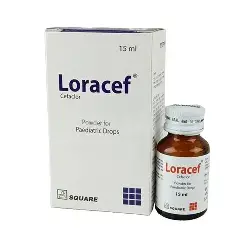
Loracef Pediatric Drops 15ML
Made in:
Brand:
Capacity:

Authentic Product

Easy Return

Secure payments and fast deliveries
Indications Loracef is indicated for the treatment of the following infections: Respiratory tract infections, including pneumonia, bronchitis, caused by Streptococcus Pneumoniae, Haemophilus Influenzae, and Streptococcus Pyogenes […]
Indications
- Respiratory tract infections, including pneumonia, bronchitis, caused by Streptococcus Pneumoniae, Haemophilus Influenzae, and Streptococcus Pyogenes
- Otitis media caused by Streptococcus pneumoniae, Haemophilus influenzae, Staphylococci, and Streptococcus pyogenes
- Pharyngitis and Tonsillitis, caused by Streptococcus pyogenes
- Urinary tract infections, including pyelonephritis and cystitis, caused by Escherichia coli, Proteus mirabilis, Klebsiella spp., and coagulase-negative Staphylococci
- Skin and skin structure infections caused by Staphylococcus aureus and Streptococcus pyogenes.
Dosage & Administration
Powder for suspension & Pediatric drops: Children: The usual daily dosage for paediatric patients over 1 month is 20 mg/kg/day in divided doses every 8 hours. In serious infections such as otitis media and infections caused by less susceptible organisms, 40 mg/kg/day are recommended, with a maximum dosage of 1 g/day. Safety and effectiveness of Cefaclor for use in infants less than 1 month of age have not been established.
<1 year (9 kg):
- Powder for suspension: ½ tsp three times daily
- Pediatric drops: 0.625 ml three times daily
1-5 years (9 kg-18 kg):
- Powder for suspension: 1 tsp three times daily
- Pediatric drops: 1.25 ml three times daily
Over 5 years:
- Powder for suspension: 2 tsp three times daily
In renal impairment: Cefaclor may be administered in the presence of impaired renal function. Dose adjustments for patients with moderate or sever renal impairment are not usually required.
In patients undergoing haemodialysis: Haemodialysis shortens serum half-life by 25-30%. In patients undergoing haemodialysis, a predialysis loading dose of 250 mg-1 g is recommended. A maintaining dose of 250-500 mg every 6 hourly during interdialytic period may be used.
Geriatric use: Clinical experience has not identified differences in responses between the elderly and younger patients, but greater sensitivity of some older individuals cannot be ruled out.
Interaction
Contraindications
Side Effects
Pregnancy & Lactation
Precautions & Warnings
Prolonged use of Loracef may result in the overgrowth of nonsusceptible organisms. If superinfection occurs during therapy, appropriate measures should be taken. As with other β-lactam antibiotics, the renal excretion of Loracef is inhibited by Probenecid. Antibiotics, including Cephalosporins, should be prescribed with caution in individuals with a history of gastrointestinal disease, particularly colitis.
Before therapy with Loracef is instituted, careful inquiry should be made to determine whether the patient has had previous hypersensitivity reactions to Loracef, Cephalosporins, Penicillins or other drugs. If Loracef is to be given to penicillin-sensitive patients, caution should be exercised. Loracef should be administered cautiously to any patient who has demonstrated some form of allergy, particularly to drugs.
Overdose Effects
Therapeutic Class
Reconstitution
Pediatric Drops: Shake the bottle well before mixing the water. To prepare 15 ml pediatric drops, add 10 ml (2 spoonfuls) of boiled & cooled water in two portions and shake till powder is completely mixed with water. The prepared drops can be used within 7 days if it is stored at room temperature and 14 days if it is kept in refrigerator.
Storage Conditions
| Capacity | 15ML |
|---|
Related products
- Capacity: 10 Tablets (1 Strip)
৳ 280.00
- Capacity: 10 Tablets (1 Strip)
৳ 120.00
- Capacity: 10 Tablets (1 Strip)
৳ 150.00
- Capacity: 10 Tablets (1 Strip)
৳ 80.00
- Capacity: 10 Tablets (1 Strip)
৳ 500.00



Reviews
There are no reviews yet.