


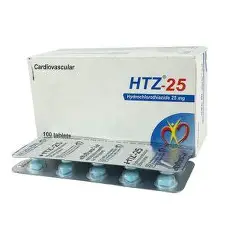
HTZ 25-MG Tablet
Made in:
Brand:
Capacity:

Authentic Product

Easy Return

Secure payments and fast deliveries
Indications Edema associated with congestive heart failure, hepatic cirrhosis, premenstrual tension and oedema due to various forms of renal dysfunction (i.e. nephrotic syndrome, acute glomerulonephritis, chronic […]
Indications
Dosage & Administration
Hypertension: 25 mg daily, increased to 50 mg daily if necessary.
Elderly: in some patients, especially the elderly an initial dose of 12.5 mg daily may be sufficient.
Children: An initial dose for children has been 1 to 2 mg per kg body-weight in 2 divided doses. Infants under 6 months may need doses up to 3 mg per kg daily.
Interaction
Cholestyramine and colestipol resin: Absorption of HTZ is impaired in the presence of anionic exchange resin. Single doses of either cholestyramine or colestipol resins bind the HTZ and reduce its absorption from the gastrointestinal tract by up to 85% and 43%, respectively. Corticosteroids or ACTH may intensify any Thiazide-induced electrolyte depletion, particularly hypokalaemia. Pressor amines such as adrenaline may show decreased arterial responsiveness when used with HTZ, but this reaction is not enough to preclude their therapeutic usefulness. Non-depolarising muscle relaxants such as tubocurarine may possibly interact with HTZ to increase muscle relaxation. Non-steroidal anti-inflammatory drugs may attenuate the diuretic and antihypertensive effects of diuretics.
Drug/laboratory tests: Because thiazides may affect calcium metabolism, HTZ may interfere with tests for parathyroid function.
Contraindications
Side Effects
Central nervous system: Dizziness, vertigo, paraesthesiae, headache, yellow vision.
Heamatological: Leucopenia, agranulocytosis, thrombocytopenia, aplastic anaemia, haemolytic anaemia.
Cardiovascular: Hypotension, including orthostatic hypotension.
Hypersensitivity: Purpura, photosensitivity, rash, urticaria, necrotising angiitis (vasculitis, cutaneous vasculitis), fever, respiratiory distress including pneumonitis and pulmonary oedema, anaphylactic reactions, toxic epidermal necrolysis.
Metabolic: Hyperglycaemia, glycosuria, hyperuricaema, electrolyte imbalance including hyponatraemia and hypokalaemia.
Renal: Renal dysfunction, interstitial nephritis, renal failure.
Other: Muscle spasm, weakness, restlessness, transient blurred vision, impotence. Whenever side-effects are moderate to severe, thiazide dosage should be reduced or therapy was withdrawn.
Pregnancy & Lactation
Use in breastfeeding mothers: Thiazides appear in breast milk. If use of the drug is deemed essential, the patient should stop breast-feeding.
Precautions & Warnings
Overdose Effects
Therapeutic Class
Storage Conditions
| Capacity | 10 Tablets ( 1Strips ) |
|---|
Related products
৳ 20.80
- Capacity: 10 Tablets (1 Strip)
৳ 100.30
- Capacity: 10 Tablets (1 Strip)
৳ 60.20
- Capacity: 10 Tablets (1 Strip)
৳ 40.10
- Capacity: 10 Tablets (1 Strip)
Original price was: ৳ 12.00.৳ 11.00Current price is: ৳ 11.00.


Reviews
There are no reviews yet.