


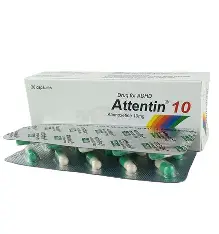
Attentin 10-MG Capsule
Made in:
Brand:
Capacity:

Authentic Product

Easy Return

Secure payments and fast deliveries
Indications Attentin capsule is indicated for the treatment of attention deficit hyperactivity disorder (ADHD) as defined by DSM-IV criteria in children 6 years of age and […]
Indications
Dosage & Administration
Children and Adolescents over 70 kg Body Weight and Adults: Atomoxetine should be initiated at a total daily dose of 40mg and increased after a minimum of three days to a target total daily dose of approximately 80mg administered either as a single daily dose in the morning or as evenly divided doses in the morning and late afternoon/early evening. After an additional two to four weeks, the dose may be increased to a maximum of 100mg in patients who have not achieved an optimal response. The maximum recommended total daily dose in children and adolescents over 70 kg is 100mg.
Maintenance/Extended Treatment: There is no evidence available from controlled trials to indicate how long the patient with ADHD should be treated with Atomoxetine. It is generally agreed, however, that pharmacological treatment of ADHD may be needed for extended periods. Nevertheless, the physician who elects to use Atomoxetine for extended periods should periodically re-evaluate the long-term usefulness of the medicine for the individual patient.
Pediatric use: The pharmacokinetics of Atomoxetine have not been evaluated in children under 6 years of age.
Interaction
Contraindications
Monoamine Oxidase Inhibitors: Atomoxetine should not be taken with monoamine oxidase inhibitors (MAOIs) or within two weeks after discontinuing MAOIs. Treatment with MAOIs should not be initiated within two weeks after discontinuing Atomoxetine. With other medicines that affect brain monoamine concentrations, there have been reports of serious, sometimes fatal, reactions when taken in combination with MAOIs. These reactions include hyperthermia, rigidity, myoclonus, autonomic instability with possible rapid fluctuations of vital signs and mental status changes that include extreme agitation progressing to delirium and coma. Some cases presented with features resembling neuroleptic malignant syndrome. Such reactions may occur when these medicines are given concurrently or in close proximity.
Narrow Angle Glaucoma: In clinical studies, the use of Atomoxetine was associated with an increased risk of mydriasis and therefore not recommended in patients with narrow angle glaucoma.
Atomoxetine is contra-indicated in patients with: Severe Cardiovascular Disorders, symptomatic cardiovascular diseases, uncontrolled hyperthyroidism, phaeochromocytoma.
Side Effects
Common: abdominal pain, rash, dyspepsia, early morning awakening, ejaculation disorder, ejaculation failure, fatigue, lethargy, tachycardia, paraesthesia, chills.
Uncommon: peripheral coldness.
Pregnancy & Lactation
Precautions & Warnings
Aggressive Behaviour or Hostility: Although there is no conclusive evidence that Attentin causes aggressive behaviour or hostility, during clinical trials these events were more frequently observed in children and adolescents treated with Attentin compared to those receiving placebo (overall risk ratio of 1.33- not statistically significant).
Seizures: The pre-clinical and clinical trial data for Attentin do not suggest that Attentin is proconvulsive. However, seizures have been very rarely reported in post-marketing spontaneous reports. Attentin should be used with caution in patients with a history of seizures.
Cardiovascular Effects: Attentin can affect heart rate and blood pressure. It is recommended that the heart rate and blood pressure be measured before treatment is started and periodically during treatment to detect possible clinically important increases.
Overdose Effects
Therapeutic Class
Storage Conditions
| Capacity | 10 Tablets ( 1Strips ) |
|---|
Related products
- Capacity: 10 Tablets (1 Strip)
৳ 50.20
- Capacity: 10 Tablets (1 Strip)
Original price was: ৳ 12.00.৳ 11.00Current price is: ৳ 11.00.
- Capacity: 10 Tablets (1 Strip)
৳ 250.00
- Capacity: 10 Tablets (1 Strip)
৳ 200.00
- Capacity: 10 Tablets (1 Strip)
৳ 450.00


Reviews
There are no reviews yet.