


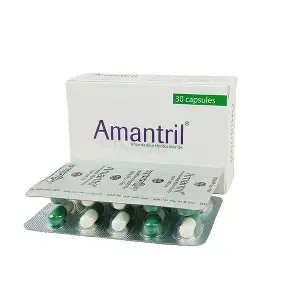
Amantril 100mg Capsule
Made in:
Brand:
Capacity:

Authentic Product

Easy Return

Secure payments and fast deliveries
Indications Amantril is indicated for- Treatment of parkinsonism Treatment of drug-induced extrapyramidal reactions Prophylaxis and treatment of signs and symptoms of infection caused by various strains […]
Indications
- Treatment of parkinsonism
- Treatment of drug-induced extrapyramidal reactions
- Prophylaxis and treatment of signs and symptoms of infection caused by various strains of influenza A virus
- Adults: The usual dose is 100 mg twice a day when used alone.
- The initial dose of Amantadine is 100 mg daily for patients with serious associated medical illnesses or who are receiving high doses of other antiparkinson drugs. After one to several weeks at 100 mg once daily, the dose may be increased to 100 mg twice daily, if necessary.
- Occasionally, patients whose responses are not optimal with Amantadine at 200 mg daily may benefit from an increase up to 400 mg daily in divided doses.
- Dosage for Concomitant Therapy: Some patients who do not respond to anticholinergic antiparkinson drugs may respond to Amantadine.
- When Amantadine or anticholinergic antiparkinson drugs are each used with marginal benefit, concomitant use may produce additional benefit. When Amantadine and levodopa therapy are initiated concurrently, the patient can exhibit rapid therapeutic benefits. Amantadine dose, should be held constant at 100 mg daily or twice daily while the daily dose of levodopa is gradually increased to optimal benefit.
- When Amantadine is added to optimal well-tolerated doses of levodopa, additional benefit may result, including smoothing out the fluctuations in improvement which sometimes occur in patients on levodopa alone. Patients who require a reduction in their usual dose of levodopa because of development of side effects may possibly regain lost benefit with the addition of Amantadine.
Drug-induced extrapyramidal reactions–
- Adults: The usual dose is 100 mg twice a day.
- Occasionally, patients whose responses are not optimal with Amantadine at 200 mg daily may benefit from an increase up to 300 mg daily in divided doses.
Prophylaxis and treatment of Influenza A virus illness–
- Adults: 200 mg/day as single dose or 100 mg twice daily. If CNS effects develop on a once- daily dosage, split dosage schedule may reduce complaints.
- Elderly over 65 years of age: 100 mg every day.
- Children: 1 to 9 years of age: 4.4 to 8.8 mg/kg/day; not to exceed 150 mg/day. 9 to 12 years of age: 100 mg twice daily
Method of administration: Each capsule is to be taken orally either with or without food.
Patients with renal impairment: The dose should be reduced. This can be achieved by either reducing the total daily dose, or by increasing the dosage interval in accordance with the creatinine clearance.
Patients with hepatic impairment: Use with caution.
Pregnancy & Lactation
Precautions & Warnings
Overdose Effects
Acute toxicity may be attributable to the anticholinergic effects of Amantril. Drug overdose has resulted in cardiac, respiratory, renal or central nervous system toxicity. Cardiac dysfunction includes arrhythmia, tachycardia and hypertension. Pulmonary edema and respiratory distress have been reported; renal dysfunction including increased BUN, decreased creatinine clearance and renal insufficiency can occur. Central nervous system effects include insomnia, anxiety, agitation, aggressive behavior, hypertonia, hyperkinesia, ataxia, gait abnormality, tremor, confusion, disorientation, depersonalization, fear, delirium, hallucinations, psychotic reactions, lethargy, somnolence and coma. Seizures may be exacerbated in patients with prior history of seizure disorders. Hyperthermia has also been observed.
There is no specific antidote for an overdose of Amantril. However, slowly administered intravenous physostigmine in 1 and 2 mg doses in an adult at 1- to 2-hour intervals and 0.5 mg doses in a child at 5- to 10-minute intervals up to a maximum of 2 mg/hour have been reported to be effective in the control of central nervous system toxicity caused by Amantril. For acute overdosing, general supportive measures should be employed along with immediate gastric lavage or induction of emesis. Fluids should be forced, and if necessary, given intravenously. The pH of the urine has been reported to influence the excretion rate of Amantril. Since the excretion rate of Amantril increases rapidly when the urine is acidic, the administration of urine acidifying drugs may increase the elimination of the drug from the body. The blood pressure, pulse, respiration and temperature should be monitored. The patient should be observed for hyperactivity and convulsions; if required, sedation, and anticonvulsant therapy should be administered. The patient should be observed for the possible development of arrhythmias and hypotension; if required, appropriate antiarrhythmic and antihypotensive therapy should be given. Electrocardiographic monitoring may be required after ingestion, since malignant tachyarrhythmias can appear after overdose.
Therapeutic Class
Storage Conditions
| Capacity | 10 Tablets (1 Strip) |
|---|
Related products
- Capacity: 10 Tablets (1 Strip)
৳ 250.00
- Capacity: 10 Tablets (1 Strip)
৳ 80.00
- Capacity: 10 Tablets (1 Strip)
৳ 150.00
- Capacity: 10 Tablets (1 Strip)
৳ 200.00
- Capacity: 10 Tablets (1 Strip)
৳ 100.30



Reviews
There are no reviews yet.