


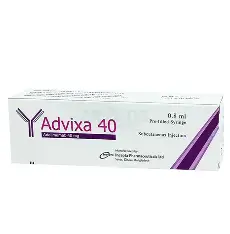
Advixa 40-MG SC Injection
Made in:
Brand:
Capacity:

Authentic Product

Easy Return

Secure payments and fast deliveries
Indications Advixa injection is a tumor necrosis factor (TNF) blocker indicated for treatment of: Rheumatoid Arthritis (RA): Reducing signs and symptoms, inducing major clinical response, inhibiting […]
Indications
- Rheumatoid Arthritis (RA): Reducing signs and symptoms, inducing major clinical response, inhibiting the progression of structural damage, and improving physical function in adult patients with moderately to severely active RA
- Juvenile Idiopathic Arthritis (JIA): Reducing signs and symptoms of moderately to severely active polyarticular JIA in patients 2 years of age and older
- Psoriatic Arthritis (PsA): Reducing signs and symptoms, inhibiting the progression of structural damage, and improving physical function in adult patients with active PsA
- Ankylosing Spondylitis (AS): Reducing signs and symptoms in adult patients with active AS
- Adult Crohn’s Disease (CD): Reducing signs and symptoms and inducing and maintaining clinical remission in adult patients with moderately to severely active Crohn’s disease who have had an inadequate response to conventional therapy. Reducing signs and symptoms and inducing clinical remission in these patients if they have also lost response to or are intolerant to infliximab
- Pediatric Crohn’s Disease: Reducing signs and symptoms and inducing and maintaining clinical remission in patients 6 years of age and older with moderately to severely active Crohn’s disease who have had an inadequate response to corticosteroids or immunomodulators such as azathioprine, 6-mercaptopurine, or methotrexate
- Ulcerative Colitis (UC): Inducing and sustaining clinical remission in adult patients with moderately to severely active ulcerative colitis who have had an inadequate response to immunosuppressants such as corticosteroids, azathioprine or 6-mercaptopurine (6-MP). The effectiveness of Advixa has not been established in patients who have lost response to or were intolerant to TNF blockers
- Plaque Psoriasis (Ps): The treatment of adult patients with moderate to severe chronic plaque psoriasis who are candidates for systemic therapy or phototherapy and when other systemic therapies are medically less appropriate
- Hidradenitis Suppurative (HS): The treatment of moderate to severe hidradenitis suppurativa
Dosage
Juvenile Idiopathic Arthritis:
- 10 kg to <15 kg: 10 mg every other week
- 15 kg to < 30 kg: 20 mg every other week
- ≥ 30 kg: 40 mg every other week
Adult Crohn’s Disease and Ulcerative Colitis:
- Initial dose (Day 1): 160 mg (four 40 mg injections in one day or two 40 mg injections per day for two consecutive days).
- Second dose two weeks later (Day 15): 80 mg.
- Two weeks later (Day 29): Maintenance dose of 40 mg every other week.
- For patients with Ulcerative Colitis only: Adalimumab should only be continued in patients who have shown evidence of clinical remission by eight weeks (Day 57) of therapy.
Pediatric Crohn’s Disease:
- 17 kg to < 40 kg: Initial dose (Day 1): 80 mg (two 40 mg injections in one day) , Second dose two weeks later (Day 15): 40 mg , Two weeks later (Day 29): Maintenance dose of 20 mg every other week.
- ≥ 40 kg: Initial dose (Day 1): 160 mg (four 40 mg injections in one day or two 40 mg injections per day for two consecutive days) , Second dose two weeks later (Day 15): 80 mg (two 40 mg injections in one day) , Two weeks later (Day 29): Maintenance dose of 40 mg every other week.
Plaque Psoriasis:
- 80 mg initial dose, followed by 40 mg every other week starting one week after initial dose.
- Hidradenitis Suppurativa: Initial dose (Day 1): 160 mg (given as four 40 mg injection on Day 1 or as two 40 mg injections per day on Days 1 and 2, Second dose two weeks later (Day 15): 80 mg (two 40 mg injections in one day), Third (Day 29) and subsequent doses: 40 mg every week.
Interaction
Anakinra: Increased risk of serious infection
Live vaccines: Advixa use should be avoided
Contraindications
Side Effects
- Other adverse reactions of Advixa includes- Gastrointestinal disorders: Diverticulitis, large bowel perforations including perforations associated with diverticulitis and appendiceal perforations associated with appendicitis, pancreatitis.
- General disorders and administration site conditions: Pyrexia.
- Hepato-biliary disorders: Liver failure, hepatitis.
- Immune system disorders: Sarcoidosis.
- Neoplasms benign, malignant and unspecified (including cysts and polyps): Merkel Cell Carcinoma (neuroendocrine carcinoma of the skin).
- Nervous system disorders: Demyelinating disorders (e.g., optic neuritis, Guillain-Barré syndrome).
- Cerebrovascular accident Respiratory disorders: Interstitial lung disease, including pulmonary fibrosis.
- Pulmonary embolism Skin reactions: Stevens Johnson Syndrome, cutaneous vasculitis, erythema multiforme, new or worsening psoriasis (all sub-types including pustular and palmoplantar), alopecia.
- Vascular disorders: Systemic vasculitis, deep vein thrombosis.
Pregnancy & Lactation
Precautions & Warnings
- Serious infections: Advixa should not be started during an active infection. If an infection develops, should be carefully monitored and if infection becomes serious Advixa should be stopped.
- Invasive fungal infections: For patients who develop a systemic illness on Advixa, empiric antifungal therapy should be considered for those who reside or travel to regions where mycoses are endemic
- Malignancies: Incidence of malignancies was greater in Advixa-treated patients than in controls
- Anaphylaxis or serious allergic reactions may occur Hepatitis B virus reactivation: HBV carriers should be monitored during and several months after therapy. If reactivation occurs, Advixa should be stopped and antiviral therapy should be started
- Demyelinating disease: Exacerbation or new onset, may occur Cytopenias, pancytopenia: Patients should be advised to seek immediate medical attention if symptoms develop, and should be considered stopping Advixa
- Heart failure: Worsening or new onset, may occur
- Lupus-like syndrome: Advixa should be stopped if syndrome develops
Use in Special Populations
Geriatric Use: A total of 519 patients 65 years of age and older, including 107 patients 75 years and older, received Advixa in clinical studies. No overall difference in effectiveness was observed between these subjects and younger subjects. The frequency of serious infection and malignancy among Advixa treated subjects over age 65 was higher than for those under age 65. Because there is a higher incidence of infections and malignancies in the elderly population in general, caution should be used when treating the elderly.
Overdose Effects
Therapeutic Class
Storage Conditions
| Capacity | Injaction |
|---|
Related products
- Capacity: 10 Tablets (1 Strip)
৳ 450.00
- Capacity: 10 Tablets (1 Strip)
৳ 500.00
- Capacity: 10 tablet ( 1strip )
৳ 120.40
৳ 60.41
- Capacity: 10 tablet ( 1strip )
৳ 30.10




Reviews
There are no reviews yet.