


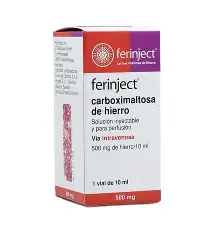
Ferinject 500-MG IV Injection or Infusion 10-ML
Made in:
Brand:
Capacity:

Authentic Product

Easy Return

Secure payments and fast deliveries
Indications Ferinject injection is indicated for the treatment of iron deficiency anemia in adult patients: who have intolerance to oral iron or have had unsatisfactory response […]
Indications
- who have intolerance to oral iron or have had unsatisfactory response to oral iron.
- who have non-dialysis dependent chronic kidney disease.
- determination of the individual iron need
- calculation and administration of the iron dose(s)
- post-iron repletion assessments.
Step 1: Determination of the iron need: The individual iron need for repletion using Fematos is determined based on the patient’s body weight and haemoglobin (Hb) level. The following list for determination of the iron need:
Hb <10 g/dl
- below 35 kg: 500 mg
- 35 kg to <70 kg: 1500 mg
- 70 kg and over: 2000 mg
Hb 10 to 14 g/dl
- below 35 kg: 500 mg
- 35 kg to <70 kg: 1000 mg
- 70 kg and over: 1500 mg
Hb >14 g/dl
- below 35 kg: 500 mg
- 35 kg to <70 kg: 500 mg
- 70 kg and over: 500 mg
Step 2: Calculation and administration of the maximum individual iron dose(s): Based on the iron need determined above the appropriate dose(s) of Ferric Carboxymaltose should be administered taking into consideration the following:
A single Ferric Carboxymaltose administration should not exceed:
- 15 mg iron/kg body weight (for administration by intravenous injection) or 20 mg iron/kg body weight (for administration by intravenous infusion)
- 1,000 mg of iron (20 ml Ferric Carboxymaltose)
- The maximum recommended cumulative dose of Ferric Carboxymaltose is 1000 mg of iron per week.
Step 3: Post-iron repletion assessments: Re-assessment should be performed by the clinician based on the individual patient’s condition. The Hb level should be re-assessed no earlier than 4 weeks post final Ferric Carboxymaltose administration to allow adequate time for erythropoiesis and iron utilisation. In the event the patient requires further iron repletion, the iron need should be recalculated using above list.
Interaction
Contraindications
- hypersensitivity to the active substance, to Ferric Carboxymaltose or any of its excipients
- known serious hypersensitivity to other parenteral iron products
- anaemia not attributed to iron deficiency, e.g. other microcytic anaemia
- evidence of iron overload or disturbances in the utilisation of iron
Side Effects
The most common side effect: nausea, followed by headache, dizziness, and hypertension, injection site reactions, nausea, alanine aminotransferase increased, hypophosphataemia.
Uncommon side effects: hypersensitivit, dysgeusia, tachycardia, hypotension, flushing, dyspnoea, dyspepsia, abdominal pain, constipation, diarrhea, Pruritus, urticaria, erythema, rash, myalgia, back pain, arthralgia, muscle spasms, Pyrexia, fatigue, chest pain, oedema peripheral, chills, aspartate aminotransferase increased, gamma glutamyl transferase increased, blood lactate dehydrogenase increased, blood alkaline phosphatase increased.
Rare side effects: anaphylactoid reactions, loss of consciousness, anxiety, phlebitis, syncope, presyncope, bronchospasm, flatulence, angioedema, pallor, and face oedema, rigors, malaise, influenza like illness.
Pregnancy & Lactation
Carboxymaltose can cross the placental barrier and that its use during pregnancy may influence skeletal development in the fetus. Treatment with Ferric Carboxymaltose should be confined to the second and third trimester if the benefit is judged to outweigh the potential risk for both the mother and the fetus. Based on limited data on breast-feeding women it is unlikely that Ferric Carboxymaltose represents a risk to the breast-fed child.
Precautions & Warnings
Hypertension: Transient elevations in systolic blood pressure, sometimes occurring with facial flushing, dizziness, or nausea may be occured. These elevations generally occurred immediately after dosing and resolved within 30 minutes. Monitor patients for signs and symptoms of hypertension following each Ferinject administration.
Laboratory Test Alterations: In the 24 hours following administration of Ferinject, laboratory assays may overestimate serum iron and transferrin bound iron by also measuring the iron in Ferinject.
Use in Special Populations
Paediatric population: The use of Ferinject has not been studied in children, and therefore is not recommended in children under 14 years.
Overdose Effects
Therapeutic Class
Storage Conditions
| Capacity | Injaction |
|---|
Related products
- Capacity: 10 Tablets (1 Strip)
৳ 80.00
- Capacity: 10 Tablets (1 Strip)
৳ 80.00
- Capacity: 10 Tablets (1 Strip)
৳ 125.00
- Capacity: 10 Tablets (1 Strip)
৳ 120.00
- Capacity: 10 Tablets (1 Strip)
৳ 200.00



Reviews
There are no reviews yet.