


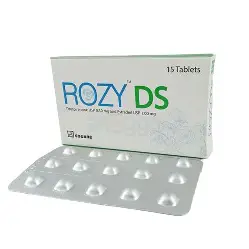
Rozy DS Tablet
Made in:
Brand:
Capacity:

Authentic Product

Easy Return

Secure payments and fast deliveries
Indications Hormone replacement therapy (HRT) for the treatment of: Climacteric syndrome in postmenopausal women including vasomotor symptoms (such as hot flushes and sweating attacks), sleep disorders, […]
Indications
- Climacteric syndrome in postmenopausal women including vasomotor symptoms (such as hot flushes and sweating attacks), sleep disorders, depressed moods, nervousness and atrophic, urogenital conditions caused by deficient endogenous estrogen production due to natural menopause, hypogonadism, castration or primary ovarian failure in women with an intact uterus.
- Prevention of postmenopausal osteoporosis.
Effects of estradiol: The loss of the ovarian function, accompanied by a depletion of estrogen and progesterone production, leads to the menopausal syndrome, characterized by vasomotor and organic symptoms. Hormone replacement therapy is indicated to eliminate these complaints. Of all physiological estrogens, E2 is the most potent one with the highest affinity to the estrogen receptor. Estrogen target organs include, in particular, uterus, hypothalamus, pituitary, vagina, breast, bones (osteoclasts).
Other effects of estrogens include reduction of insulin and blood glucose concentrations local vasoactive effects mediated by receptors, and receptor-independent effects on vascular smooth muscle. Estrogen receptors have been identified in the heart and coronary arteries. Oral administration of natural estrogens is advantageous in certain cases of hypercholesterolemia in order to maximize beneficial metabolic liver effects on lipids.
Dosage
Dosage: One tablet is taken daily.
Missed tablets: In case a tablet is forgotten, it should be taken as soon as possible. If more than 24 hours have elapsed, no extra tablet needs to be taken. If several tablets are forgotten, bleeding may occur
Interaction
The main metabolites of DRSP are generated without involvement of the cytochrome P450 system. Inhibitors of this enzyme system are therefore unlikely to influence the metabolism of DRSP. Nevertheless, inhibitors of’CYP3A4, like cimetidine, ketoconazole and others, may inhibit the metabolism of E2.
- Interaction with alcohol
- Acute alcohol ingestion during use of HRT may lead to elevations
- Known or suspected premalignant conditions or malignancies, if sex steroid-influenced
- Presence or history of liver tumors (benign or malignant)
- Severe hepatic disease
- Presence or history of severe renal disease as long as renal function values have not returned to normal
- Acute arterial thromboembolism (e.g. myocardialinfarction, stroke)
- Active deep venous thrombosis,thromboembolic disorders,or a documented history of these conditions
- A high risk of venous or arterial thrombosis
- Severe hypertriglyceridemia
- Pregnancy or lactation (see section 4.6 Pregnancy and lactation)
- Hypersensitivity to the active substances or to any of the excipients
Contraindications
- Undiagnosed abnormal genital bleeding
- Known or suspected cancer of the breast
- Known or suspected premalignant conditions or malignancies, if sex steroid-influenced
The excess risk disappears within a few years after stopping HRT. HRT increases the density of mammographic images which may adversely affect the radiological detection of breast cancer in some cases.
Endometrial cancer: Prolonged exposure to unopposed estrogens increases the risk of development of endometrial hyperplasia or carcinoma. The addition of DRSP opposes the development of endometrial hyperplasia caused by estrogens.
Liver tumors: In rare cases benign, and even more rarely, malignant liver tumors have been observed after the use of hormonal substances such as those contained in HRT products. In isolated cases, these tumors led to life-threatening intra-abdominal hemorrhage.
Side Effects
Pregnancy & Lactation
Precautions & Warnings
- Migrainous or frequent and unusually severe headaches that occur for the first time or other symptoms that are possible prodromal of cerebrovascular occlusion.
- Recurrence of cholestatic jaundice or cholestatic pruritus which occurred first during pregnancy or previous use of sex steroids.
- Symptoms of a thrombotic event.
In the event of new onset or deterioration of the following conditions or risk factors, the individual benefit/risk analysis should be re-done, taking into consideration the possible necessity of discontinuing therapy. The potential for an increased synergistic risk of thrombosis should be considered in women who possess a combination of risk factors or exhibit a greater severity of an individual risk factor. This increased risk may be greater than a simple cumulative risk of the factors. HRT should not be prescribed in case of a negative risk benefit assessment.
Venous thromboembolism: Both randomized-controlled and epidemiological studies have suggested an increased relative risk of developing venous thromboembolism (VTE), i.e. deep venous thrombosis or pulmonary embolism. Benefit/Risk should therefore be carefully weighed in consultation with the patient when prescribing HRT to women with a risk factor for VIE. Generally recognized risk factors for VTE include a personal history, a family history (the occurrence of VTE in a direct relative at a relatively early age may indicate genetic disposition) and severe obesity. The risk of VTE also increases with age. There is no consensus about the possible role of varicose veins in VTE. The risk of VTE may be temporarily increased with prolonged immobilization, major elective or post-traumatic surgery, or major trauma. Depending on the nature of the event and the duration of the immobilization, consideration should be given to a temporary discontinuation of HRT.
Use in Special Populations
Geriatric patients: There are no data suggesting a need for dosage adjustment in elderly patients.
Patients with hepatic impairment: In women with mild or moderate hepatic impairment, DRSP is well tolerated. This is
contraindicated in women with severe hepatic disease
Patients with renal impairment: In women with mild or moderate renal impairment, a slight increase of DRSP exposure was observed but is not expected to be of clinical relevance. This is contraindicated in women with severe renal disease.
Overdose Effects
Therapeutic Class
Storage Conditions
| Capacity | 15 Tablets ( 1 Strips ) |
|---|
Related products
- Capacity: 10 Tablets (1 Strip)
৳ 100.30
- Capacity: 10 Tablets (1 Strip)
৳ 120.40
- Capacity: 10 Tablets (1 Strip)
৳ 150.00
- Capacity: 10 Tablets (1 Strip)
৳ 80.00
- Capacity: 10 Tablets (1 Strip)
৳ 350.00



Reviews
There are no reviews yet.