


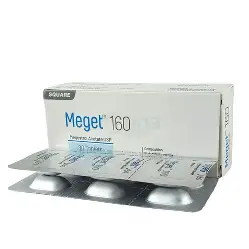
Meget 160MG Tablets
Made in:
Brand:
Capacity:

Authentic Product

Easy Return

Secure payments and fast deliveries
Indications Meget tablet is indicated for the palliative treatment of advanced carcinoma of the breast or endometrium (i.e., recurrent, inoperable or metastatic disease). It should not […]
Indications
Meget oral suspension is indicated for the treatment of anorexia, cachexia, or an unexplained, significant weight loss in patients with a diagnosis of Acquired Immunodeficiency Syndrome (AIDS) & cancer.
Estimates of plasma levels of Megestrol Acetate are dependent on the measurement method used. Peak plasma concentrations occur 2 to 3 hours after a single oral dose 160 mg tablets. The plasma half-life of Megestrol Acetate is 33 to 38 hours. Approximately 66% of an administered dose is excreted in the urine and approximately 20% in the faeces.
Dosage & Administration
- Breast cancer: 160 mg/day
- Endometrial carcinoma: 40-320 mg/day in divided doses.
- At least 2 months of continuous treatment is considered an adequate period for determining the efficacy of Megestrol.
Oral Suspension: The recommended adult initial dosage of Megestrol Oral Suspension is 800 mg/day (20 ml/day).
Interaction
With food and others: Estrogens and Progestogens may cause fluid retention, particularly when given in high dosages or for prolonged periods. Therapy with these agents should be administered cautiously in patients who have preexisting problems with excess fluid.
Contraindications
Side Effects
Untoward reactions that have been reported to occur in patients receiving Meget include nausea, vomiting, edema and breakthrough uterine bleeding and occur in approximately 1% to 2% of patients. Gynecomastia and loss of hearing have also been reported. Dyspnea, heart failure, hypertension, hot flashes, mood changes, Cushingoid facies, tumor flare (with or without hypercalcemia), hyperglycemia, alopecia, carpal tunnel syndrome and rash have also occurred.
Thromboembolic phenomenon including thrombophlebitis and pulmonary embolism (in some cases fatal) have also been reported.
Pregnancy & Lactation
Precautions & Warnings
Meget should be used under the supervision of a specialist and the patients kept under regular surveillance. Meget can exert adrenocortical effects. This should be borne in mind in patient surveillance.
Patients with rare hereditary problems of galactose intolerance, the Lapp lactase deficiency or glucose-galactose malabsorption should not take this medicine.
Insufficient data from clinical studies of megesterol acetate are available for patients 65 years of age and older to determine whether they respond differently than younger patients. Other reported clinical experience has not identified differences in responses between elderly and younger patients. In general, use in elderly patients should be cautious, reflecting the greater frequency of decreased hepatic, renal, or cardiac function, and of concomitant disease or other drug therapy. Meget is known to be substantially excreted by the kidney, and the risk of toxic reactions to Meget may be greater in patients with impaired renal function. Because elderly patients are more likely to have decreased renal function, care should be taken during treatment with Meget, and it may be useful to monitor renal function.
Use in Special Populations
Geriatric Use: Insufficient data from clinical studies of Meget tablets are available for patients 65 years of age and older to determine whether they respond differently than younger patients.
Overdose Effects
Storage Conditions
| Capacity | 6 Tablets ( 1 Strips ) |
|---|
Related products
- Capacity: 10 Tablets (1 Strip)
৳ 450.00
- Capacity: 10 Tablets (1 Strip)
৳ 120.00
- Capacity: 10 Tablets (1 Strip)
৳ 100.30
- Capacity: 10 Tablets (1 Strip)
৳ 250.00
- Capacity: 10 Tablets (1 Strip)
৳ 80.00


Reviews
There are no reviews yet.